
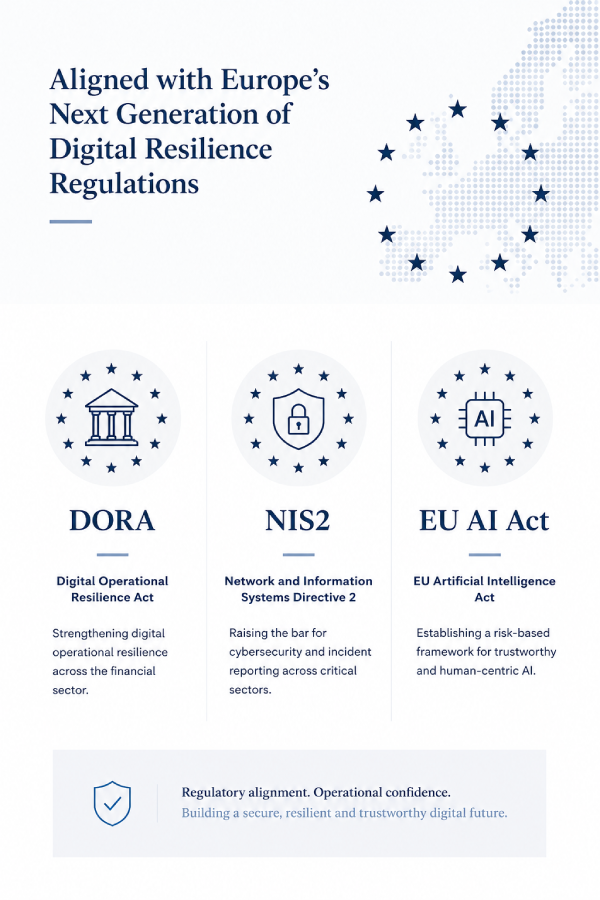
“Under DORA Article 5(2) and NIS2 Article 20(1), you — as a member of the management body — are personally accountable for your organisation’s cybersecurity and digital resilience posture. Not your CISO. Not your IT team. You!”
Under DORA Article 5, NIS2 Article 20, and the EU AI Act Article 26, management bodies bear direct, personal accountability for digital resilience and cybersecurity governance. Boards can no longer delegate oversight — they are legally required to approve, oversee, and be accountable for their organisation’s ICT risk frameworks. Independent validation is how boards evidence that accountability.
CRI provides independent, evidence-based validation that your reported cybersecurity posture reflects operational reality — not just what your team or consultants want it to say.
Many organisations conduct cybersecurity maturity assessments or regulatory readiness reviews.
But boards increasingly ask one critical question:
Cyber Risk International’s Independent Validation Assessment provides objective, evidence-based verification of your cybersecurity or digital resilience assessment.
DORA Article 5(2) places direct, personal accountability on every member of the management body for the ICT risk management framework.
NIS2 Article 32(6) empowers national authorities to temporarily prohibit named individuals from managerial roles for persistent non-compliance.
Independent validation is how boards evidence they met that obligation.
Assurance for Regulators and Stakeholders

Regulators are no longer accepting reported posture at face value.
Under DORA Article 6(6), ICT risk management frameworks must be subject to independent audit functions — not internal reviews, not consultant-led readiness exercises. NIS2 Article 21 requires proportionate, verifiable technical and organisational measures. The EU AI Act Article 26 places human oversight and governance obligations on any organisation deploying high-risk AI systems. Self-attestation satisfies none of these requirements.
Under DORA Article 5 and NIS2 Article 20, the management body bears direct, personal accountability for cybersecurity governance. Regulators, internal audit, and risk committees are all asking the same question: how do we know the reported posture is real?
Independent validation is the evidence trail that answers it.
“The EU AI Act Article 26 places obligations on deployers of high-risk AI systems to implement human oversight and maintain logs. Article 9 requires high-risk AI providers to establish risk management systems with appropriate governance. Where organisations are deploying or relying on AI tools — including in cybersecurity operations — independent validation of those governance controls is increasingly expected by supervisory authorities.”
EU AI ACT
DORA Article 6(6) requires that ICT risk management frameworks are subject to internal audit by independent functions. DORA Article 24 establishes requirements for advanced digital operational resilience testing, including threat-led penetration testing by independent testers. NIS2 Article 21(1) requires proportionate technical and organisational measures — and regulators increasingly expect independent verification, not self-attestation, as evidence of compliance.
However Many Assessments are:
Independent validation provides objective assurance that reported results are supported by evidence.
DORA Recital 45 is unambiguous: management bodies bear full responsibility for ICT risk. Under DORA Article 5(2) and NIS2 Article 20(1), every member of the management body is personally accountable — not the CISO, not the IT team. The board.
NIS2 Article 32(6) makes the personal consequences explicit: competent authorities can temporarily prohibit named individuals from exercising management functions where non-compliance persists. This is not an organisational sanction. It is a personal one.
A ‘Low Confidence’ or ‘Limited Confidence’ Validation Rating is a material governance finding — precisely the scenario regulators treat as evidence of management body failure.
Where AI systems are deployed, EU AI Act Article 26 adds further board-level oversight obligations.
The question is no longer whether boards are accountable. It is whether they can prove it.
An Independent Validation Assessment evaluates the accuracy and credibility of an existing cybersecurity or digital resilience assessment.
Rather than repeating the full assessment, Cyber Risk International performs a structured validation of previously reported results.
This includes:
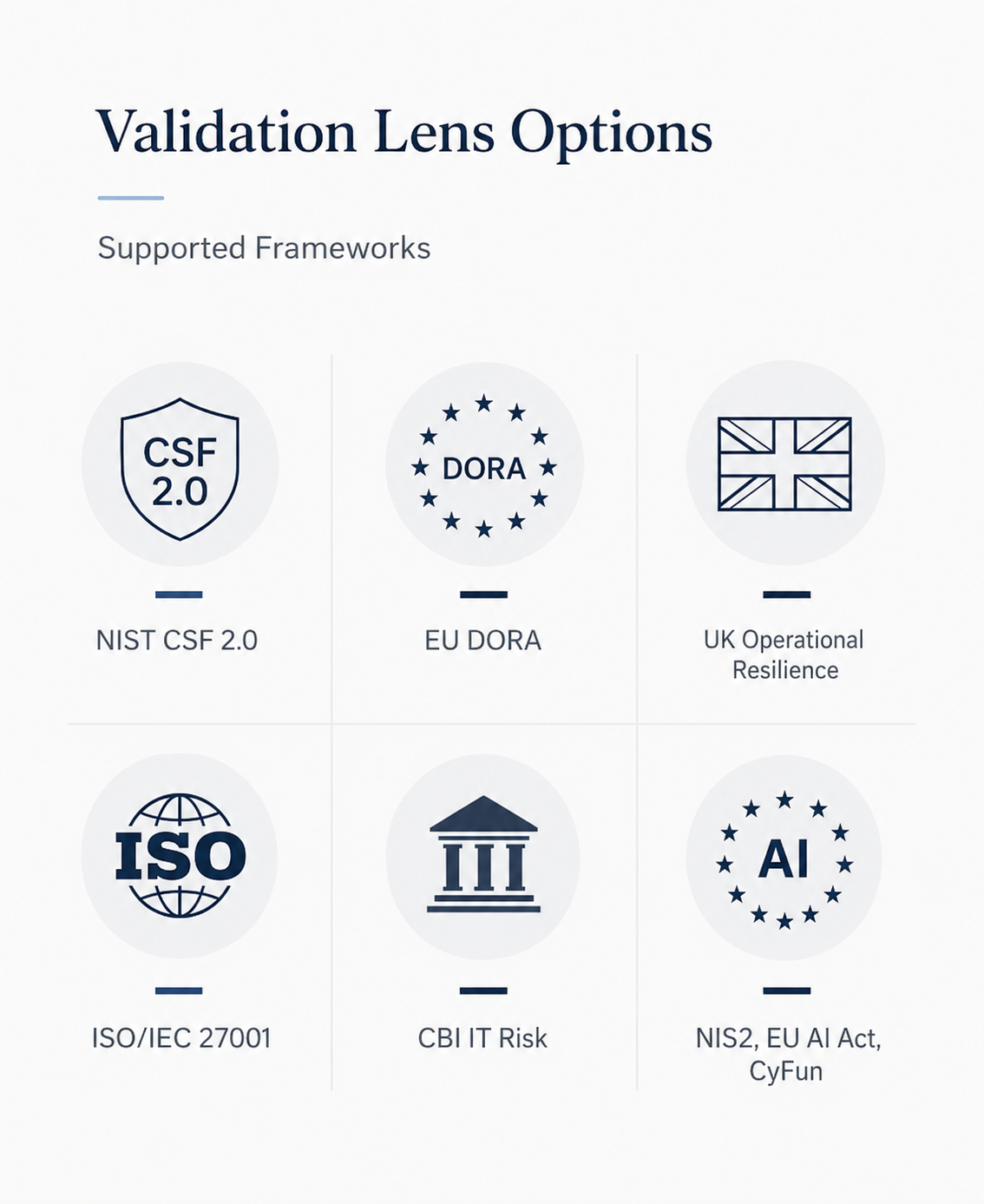
Independent Validation Assessments can be performed through the lens of major cybersecurity frameworks and regulatory regimes.
Supported Frameworks
Organisations select the framework through which validation will be performed.
Choose the Validation Lens That Matches Your Regulatory Environment
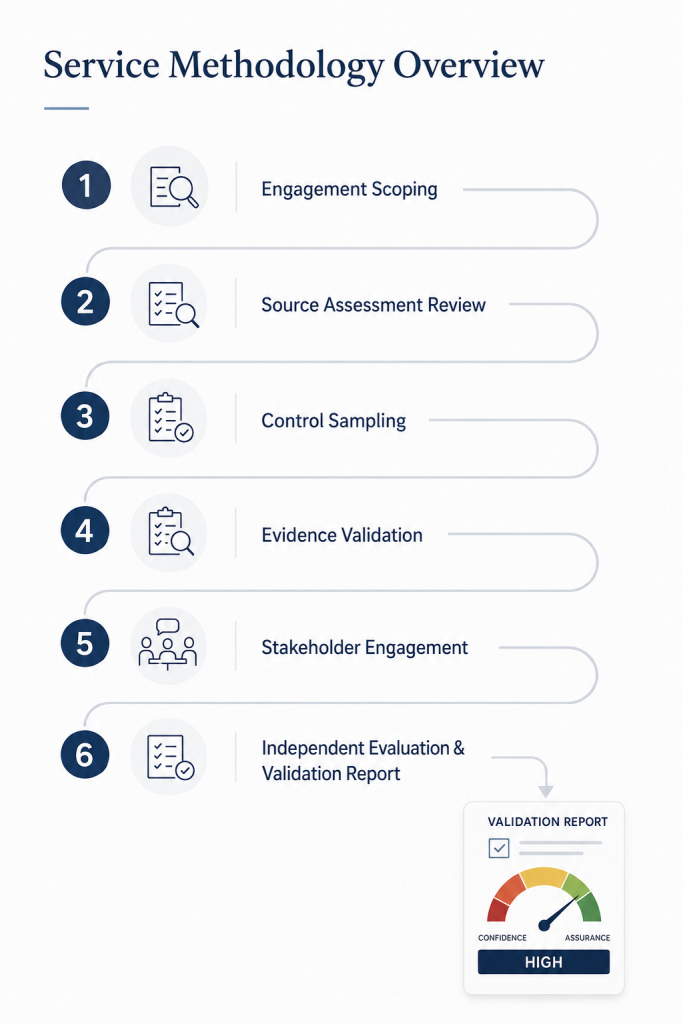
A Structured Evidence-Based Validation Process
Cyber Risk International applies a rigorous validation methodology supported by the CyberPrism Digital Resilience Platform.
Define validation framework, organisational scope, and source assessment.
Review the original assessment, maturity scoring, and reported control status.
Select a randomised sample of controls or regulatory requirements.
Review policies, procedures, logs, governance documentation, and operational artefacts.
Conduct sessions with relevant personnel to clarify control ownership and implementation.
Produce a board-level report including findings and a Validation Confidence Rating.
This methodology builds an evidence-based picture of the organisation’s true cybersecurity posture.
“Boards do not need another maturity score. They need confidence that management’s reported position is real, evidenced, and defensible.”
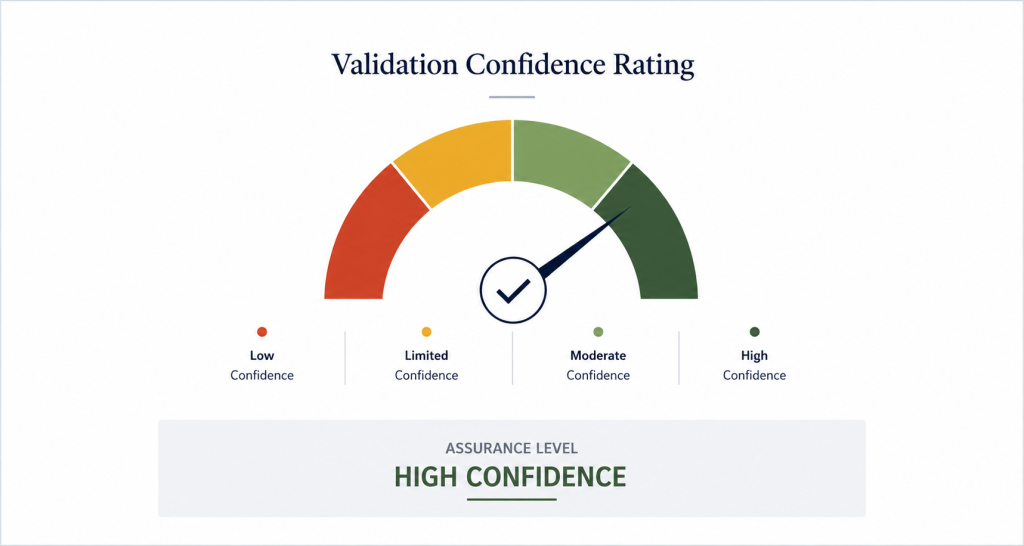
Board-Level Assurance Through a Validation Confidence Rating
Each Independent Validation Assessment includes a Validation Confidence Rating, indicating the degree to which evidence supports the reported cybersecurity posture.
| Rating | Meaning |
|---|---|
| High Confidence | Evidence strongly supports the reported cybersecurity posture |
| Moderate Confidence | Minor discrepancies identified but overall posture credible |
| Limited Confidence | Significant inconsistencies between reported posture and evidence |
| Low Confidence | Reported posture not supported by evidence |
This rating provides clear insight for boards and senior leadership.
Validation Engagement Options
Includes:
Typical duration: 6–8 weeks
Independent Assurance for Leadership
The Independent Validation Assessment provides senior leadership with clear assurance regarding the credibility of the organisation’s cybersecurity and digital resilience posture.
Key Outputs
This enables boards to determine whether management’s reported cybersecurity posture is supported by evidence and operational reality.
Areas for validation can include:
Deliverables can include:
CyberPrism is provided as a SaaS enablement platform to support organisational assessment, governance, and resilience activities.
CRI’s Independent Validation Assessments remain separate and evidence-based, focusing on the organisation’s actual controls, governance, implementation maturity, and supporting evidence — rather than relying solely on platform-generated outputs.
Any prior advisory or remediation involvement by CRI is disclosed and governed through defined independence safeguards and review boundaries.
Digital Resilience with CRI
Cyber Risk International empowers organisations to achieve true digital resilience through expert-led advisory, integrated technology, and executive education — enabling leadership to confidently navigate complex threats and regulatory demands.
ICTTF House – Unit 15, N17 Business Park, Tuam, Co Galway, H54 H1K2, Ireland
Registered Company: 550801 VAT: IE 3292853TH DUNS: 985605977
Stay informe with the latest cybersecurity news, expert tips.
Copyright © 2026 All Rights Reserved.